
Sister Songs, by Francis Thompson
Transcribed from the 1908 Burns and push and pull toys for easter basketOates edition by DavidPrice, email [email protected]
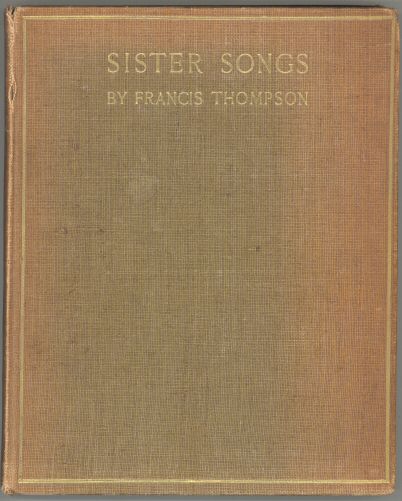
Sister Songs
An Offering to Two Sisters
BY
FRANCIS THOMPSON

BURNS & OATES
28, ORCHARD STREET
LONDON, W.: 1908
p.iiiPREFACE
This poem, though new in the senseof being now for the first time printed, was written some fouryears ago, about the same date as the Hound of Heaveninmy former volume.
One image in the Proemwas an unconscious plagiarismfrom the beautiful image in Mr. Patmore’s St.Valentine’s Day:—
“O baby Spring,
That flutter’st sudden ’neath the breast of Earth,
A month before the birth!”
Finding I could not disengage it without injury to the passagein which it is embedded, I have preferred to leave it, with thisacknowledgment to a Poet rich enough to lend to the poor.
FRANCIS THOMPSON.
1895.
p. vTo
Monica and Madeline (Sylvia) Meynell
p. 1SISTERSONGS
An Offering to Two Sisters
The Proem
Shrewd winds andshrill—were these the speech of May?
A ragged, slag-grey sky—invested so,
Mary’s spoilt nursling! wert thou wont togo?
Or thou, Sun-god andsong-god, say
Could singer pipe one tiniest linnet-lay,
While Song did turn away his face from song?
Or who couldbe
In spirit or in body hale for long,—
Old Æsculap’s bestMaster!—lacking thee?
p. 2At length,then, thou art here!
On theearth’s lethèd ear
Thy voice of light rings out exultant, strong;
Through dreams she stirs and murmurs at that summons dear:
From its red leash my heartstrains tamelessly,
For Spring leaps in the womb of the young year!
Nay, was it not brought forthbefore,
And we waited,to behold it,
Till thesun’s hand should unfold it,
What the year’s young bosombore?
Even so; it came, nor knew we that it came,
In thesun’s eclipse.
Yet the birds have plightedvows,
And from the branches pipe each other’s name;
Yet the season all the boughs
Has kindled to thefinger-tips,—
Mark yonder, how the long laburnum drips
Its jocund spilth of fire, its honey of wild flame!
Yea, and myself put on swift quickening,
And answer to the presence of a sudden Spring.
From cloud-zoned pinnacles of the secret spirit
p.3Song falls precipitant in dizzying streams;
And, like a mountain-hold when war-shouts stir it,
The mind’s recessèd fastness casts to light
Its gleaming multitudes, that from every height
Unfurl the flaming of a thousand dreams.
Now therefore, thou who bring’st the year to birth,
Who guid’st the bare and dabbled feet ofMay;
Sweet stem to that rose Christ, who from the earth
Suck’st our poor prayers, conveying them to Him;
Be aidant, tender Lady, to my lay!
Of thy two maidens somewhat must I say,
Ere shadowy twilight lashes, drooping, dim
Day’s dreamy eyes from us;
Ere eve has struck and furled
The beamy-textured tent transpicuous,
Of webbèd coerule wrought and woven calms,
Whence has paced forth thelambent-footed sun.
And Thou disclose my flower of song upcurled,
Who from Thy fair irradiantpalms
Scatterest all love and loveliness as alms;
Yea, Holy One,
Who coin’st Thyself to beauty for the world!
p.4Then, Spring’s little children,your lauds do ye upraise
To Sylvia, O Sylvia, her sweet, featways!
Your lovesome labours lay away,
And trick you out in holiday,
For syllabling to Sylvia;
And all you birds on branches, lave your mouths withMay,
To bear with me this burthen,
For singing to Sylvia.
p. 5Part theFirst
The leaves dance,the leaves sing,
The leaves dance in the breath of the Spring.
I bid themdance,
I bid them sing,
For the limpidglance
Of my ladyling;
For the gift to the Spring of a dewier spring,
For God’s good grace of this ladyling!
I know in the lane, by the hedgerow track,
The long, broad grasses underneath
Are warted with rain like a toad’s knobbed back;
But here May weareth a rainless wreath.
In the new-sucked milk of the sun’s bosom
Is dabbled the mouth of the daisy-blossom;
The smouldering rosebud chars through its sheath;
The lily stirs her snowy limbs,
p. 6Ere sheswims
Naked up through her cloven green,
Like the wave-born Lady of Love Hellene;
And the scattered snowdrop exquisite
Twinkles andgleams,
As if the showers of the sunny beams
Were splashed from the earth in drops of light.
Everything
That is child ofSpring
Casts its bud or blossoming
Upon the stream of my delight.
Their voices, that scents are,now let them upraise
To Sylvia, O Sylvia, her sweet, featways!
Their lovely mother them array,
And prank them out in holiday,
For syllabling to Sylvia;
And all the birds on branches lave their mouths withMay,
To bear with me this burthen,
For singing to Sylvia.
p. 72.
While thus I stood in mazes bound
Of vernal sorcery,
I heard a dainty dubious sound,
As of goodly melody;
Which first was faint as if in swound,
Then burst so suddenly
In warring concord all around,
That, whence this thing might be,
To see
The very marrow longed in me!
It seemed of air, it seemed of ground,
And never any witchery
Drawn from pipe, or reed, or string,
Made such dulcet ravishing.
’Twas like no earthly instrument,
Yet had something of them all
In its rise, and in its fall;
As if in one sweet consort there were blent
Those archetypes celestial
Which our endeavouring instruments recall.
p.8So heavenly flutes made murmurous plain
To heavenly viols, that again
—Aching with music—wailed back pain;
Regals release their notes, which rise
Welling, like tears from heart to eyes;
And the harp thrills with thronging sighs.
Horns in mellow flattering
Parley with the cithern-string:—
Hark!—the floating, long-drawn note
Woos the throbbing cithern-string!
Their pretty, pretty prating thosecitherns sure upraise
For homage unto Sylvia, her sweet, featways:
Those flutes do flute their vowelled lay,
Their lovely languid language say,
For lisping to Sylvia;
Those viols’ lissom bowings break the heart ofMay,
And harps harp their burthen,
For singing to Sylvia.
3.
Now at that music and thatmirth
Rose, as ’twere, veils from earth;
p. 9And I spied
How beside
Bud, bell, bloom, an elf
Stood, or was the flower itself
’Midradiant air
All the fair
Frequence swayed in irised wavers.
Some against the gleaming rims
Their bosoms prest
Of the kingcups, to the brims
Filled with sun, and their white limbs
Bathèd in those golden lavers;
Some on the brown, glowing breast
Of that Indian maid, the pansy,
(Through its tenuous veils confest
Of swathing light), in a quaint fancy
Tied her knot of yellow favours;
Others dared open draw
Snapdragon’s dreadful jaw:
Some, just sprung from out the soil,
Sleeked and shook their rumpled fans
Dropt with sheen
p. 10Of moonygreen;
Others, not yet extricate,
On their hands leaned their weight,
And writhed them free with mickle toil,
Still folded in their veiny vans:
And all with an unsought accord
Sang together from the sward;
Whence had come, and from sprites
Yet unseen, those delights,
As of tempered musics blent,
Which had given me such content.
For haply our best instrument,
Pipe or cithern, stopped or strung,
Mimics but some spirit tongue.
Their amiable voices, I bid themupraise
To Sylvia, O Sylvia, her sweet, featways;
Their lovesome labours laid away,
To linger out this holiday
In syllablingto Sylvia;
While all the birds on branches lave their mouths withMay,
p. 11To bearwith me this burthen,
For singing to Sylvia.
4.
Next I saw, wonder-whist,
How from the atmosphere a mist,
So it seemed, slow uprist;
And, looking from those elfin swarms,
I was’ware
How the air
Was all populous with forms
Of the Hours, floating down,
Like Nereids through a watery town.
Some, with languors of waved arms,
Fluctuous oared their flexile way;
Some were borne half resupine
On the aërial hyaline,
Their fluid limbs and rare array
Flickering on the wind, as quivers
Trailing weed in running rivers;
And others, in far prospect seen,
Newly loosed on this terrene,
p.12Shot in piercing swiftness came,
With hair a-stream like pale and goblin flame.
As crystálline ice in water,
Lay in air each faint daughter;
Inseparate (or but separate dim)
Circumfused wind from wind-like vest,
Wind-like vest from wind-like limb.
But outward from each lucid breast,
When some passion left its haunt,
Radiate surge of colour came,
Diffusing blush-wise, palpitant,
Dying all the filmy frame.
With some sweet tenderness they would
Turn to an amber-clear and glossy gold;
Or a fine sorrow, lovely to behold,
Would sweep them as the sun and wind’s joined flood
Sweeps a greening-sapphire sea;
Or they would glow enamouredly
Illustrious sanguine, like a grape of blood;
Or with mantling poetry
Curd to the tincture which the opal hath,
Like rainbows thawing in a moonbeam bath.
p. 13So paledthey, flushed they, swam they, sang melodiously.
Their chanting, soon fading,let them, too, upraise
For homage unto Sylvia, her sweet, featways;
Weave with suave float their wavèdway,
And colours take of holiday,
Forsyllabling to Sylvia;
And all the birds on branches lave their mouths withMay,
To bear with me this burthen,
For singingto Sylvia.
5.
Then, through thosetranslucencies,
As grew my senses clearer clear,
Did I see, and did I hear,
How under an elm’s canopy
Wheeled a flight of Dryades
Murmuring measured melody.
Gyre in gyre their treading was,
Wheeling with an adverse flight,
In twi-circle o’er the grass,
p.14These to left, and those to right;
All the band
Linkèd by each other’s hand;
Decked in raiment stainèd as
The blue-helmèd aconite.
And they advance with flutter, with grace,
To the dance
Moving on with a dainty pace,
As blossoms mince it on river swells.
Over their heads their cymbals shine,
Round each ankle gleams a twine
Of twinkling bells—
Tune twirled golden from their cells.
Every step was a tinkling sound,
As they glanced in their dancing-ground,
Clouds in cluster with such a sailing
Float o’er the light of the wasting moon,
As the cloud of their gliding veiling
Swung in the sway of the dancing-tune.
There was the clash of their cymbals clanging,
Ringing of swinging bells clinging their feet;
And the clang on wing it seemed a-hanging,
p.15Hovering round their dancing so fleet.—
I stirred, I rustled more than meet;
Whereat they broke to the left and right,
With eddying robes like aconite
Blue of helm;
And I beheld to the foot o’ the elm.
They have not tripped those dances,betrayed to my gaze,
To glad the heart of Sylvia, beholding of theirmaze;
Through barky walls have slid away,
And tricked them in their holiday,
For other than forSylvia;
While all the birds on branches lave their mouths withMay,
And bear with me this burthen,
For singing to Sylvia.
6.
Where its umbrage wasenrooted,
Satwhite-suited,
Sat green-amiced, and bare-footed,
Spring amid her minstrelsy;
There she sat amid her ladies,
p. 16Where theshade is
Sheen as Enna mead ere Hades’
Gloom fell thwart Persephone.
Dewy buds were interstrown
Through her tresses hanging down,
And her feet
Were mostsweet,
Tinged like sea-stars, rosied brown.
A throng of children like to flowers were sown
About the grass beside, or clomb her knee:
I looked who were that favoured company.
And one therestood
Against thebeamy flood
Of sinking day, which, pouring its abundance,
Sublimed the illuminous and volute redundance
Of locks that, half dissolving, floated round her face;
As see Imight
Far off a lily-cluster poised in sun
Dispread its gracile curls oflight
I knew what chosen child was there in place!
I knew there might no brows be, save of one,
With such Hesperian fulgence compassèd,
p. 17Which inher moving seemed to wheel about her head.
O Spring’s little children,more loud your lauds upraise,
For this is even Sylvia, with her sweet, featways!
Your lovesome labours lay away,
And prank you out in holiday,
Forsyllabling to Sylvia;
And all you birds on branches, lave your mouths withMay,
To bear with me thisburthen
For singingto Sylvia!
7.
Spring, goddess, is it thou, desirèdlong?
And art thou girded round with this young train?—
If ever I did do thee ease in song,
Now of thy grace let me one meed obtain,
And list thou toone plain.
Oh, keep stillin thy train
After the years when others therefrom fade,
This tiny, well-belovèdmaid!
To whom the gate of my heart’s fortalice,
With all whichin it is,
p. 18And theshy self who doth therein immew him
’Gainst what loud leagurers battailously woo him,
I, bribèdtraitor to him,
Set open for onekiss.
Then suffer, Spring, thychildren, that lauds they should upraise
To Sylvia, this Sylvia, her sweet, featways;
Their lovely labours lay away,
And trick them out in holiday,
Forsyllabling to Sylvia;
And that all birds on branches lave their mouths withMay,
To bear with me this burthen,
For singingto Sylvia.
8.
Akiss? for a child’s kiss?
Aye, goddess, even for this.
Once, bright Sylviola! in days not far,
Once—in that nightmare-time which still doth haunt
My dreams, a grim, unbidden visitant—
Forlorn, and faint, and stark,
p. 19I hadendured through watches of the dark
The abashless inquisition of each star,
Yea, was the outcast mark
Of all thoseheavenly passers’ scrutiny;
Stood bound andhelplessly
For Time to shoot his barbèd minutes at me;
Suffered the trampling hoof of every hour
In night’sslow-wheelèd car;
Until the tardy dawn dragged me at length
From under those dread wheels; and, bled ofstrength,
I waited the inevitable last.
Then there camepast
A child; like thee, a spring-flower; but a flower
Fallen from the budded coronal of Spring,
And through the city-streets blown withering.
She passed,—O brave, sad, lovingest, tenderthing!—
And of her own scant pittance did she give,
That I might eatand live:
Then fled, a swift and trackless fugitive.
Therefore Ikissed in thee
The heart of Childhood, so divine for me;
p. 20And her, through what sore ways,
And what unchildish days,
Borne from me now, as then, a trackless fugitive.
Therefore I kissed in thee
Her, child! and innocency,
And spring, and all things that have gone from me,
And that shall never be;
All vanished hopes, and all most hopeless bliss,
Came with thee to my kiss.
And ah! so long myself had strayed afar
From child, and woman, and the boon earth’s green,
And all wherewith life’s face is fair beseen;
Journeying its journey bare
Five suns, except of the all-kissing sun
Unkissed ofone;
Almost I hadforgot
The healingharms,
And whitest witchery, a-lurk in that
Authentic cestus of two girdling arms:
And I remembered not
The subtle sanctities which dart
From childish lips’ unvalued precious brush,
p. 21Nor how itmakes the sudden lilies push
Between the loosening fibres of the heart.
Then, that thylittle kiss
Should be to meall this,
Let workaday wisdom blink sage lids thereat;
Which towers a flight three hedgerows high, poor bat!
And straightway charts me out the empyreal air.
Its chart I wing not by, its canon of worth
Scorn not, nor reck though mine should breed it mirth:
And howso thou and I may be disjoint,
Yet still my falcon spirit makes her point
Over the covertwhere
Thou, sweetest quarry, hast put in from her!
(Soul, hush these sad numbers,too sad to upraise
In hymning bright Sylvia, unlearn’d in suchways!
Our mournful moods lay we away,
And prank our thoughts in holiday,
Forsyllabling to Sylvia;
When all the birds on branches lave their mouths withMay,
To bear with us this burthen,
For singingto Sylvia!)
p.229.
Then thus Spring, bounteous lady, madereply:
“O lover of me and all my progeny,
For grace toyou
I take her ever to my retinue.
Over thy form, dear child, alas! my art
Cannot prevail; but mine immortalising
Touch I lay uponthy heart.
Thy soul’sfair shape
In my unfading mantle’s green I drape,
And thy white mind shall rest by my devising
A Gideon-fleece amid life’s dusty drouth.
If Even burst yon globèd yellow grape
(Which is the sun to mortals’ sealèd sight)
Against herstainèd mouth;
Or ifwhite-handed light
Draw thee yet dripping from the quiet pools,
Still lucenciesand cools,
Of sleep, which all night mirror constellate dreams;
Like to the sign which led the Israelite,
Thy soul,through day or dark,
A visible brightness on the chosen ark
p. 23Of thy sweet body and pure,
Shall it assure,
With auspice large and tutelary gleams,
Appointed solemn courts, and covenanted streams.”
Cease, Spring’s littlechildren, now cease your lauds to raise;
That dream is past, and Sylvia, with hersweet, feat ways.
Our lovèd labour, laid away,
Is smoothly ended; said our say,
Our syllableto Sylvia.
Make sweet, you birds on branches! make sweetyour mouths with May!
But borne is this burthen,
Sung unto Sylvia.
p. 24Partthe Second
And now, thou eldernursling of the nest;
Ere all the intertangled west
Be onemagnificence
Of multitudinous blossoms that o’errun
The flaming brazen bowl o’ the burnished sun
Which they doflower from,
How shall I ’stablish thymemorial?
Nay, how or with what countenance shall I come
To plead in mydefence
For loving theeat all?
I who can scarcely speak my fellows’ speech,
Love their love, or mine own love to them teach;
A bastard barred from their inheritance,
Who seem, in this dim shape’s uneasy nook,
Some sun-flower’s spirit which by luckless chance
Has mournfully its tenement mistook;
p. 25When itwere better in its right abode,
Heartless and happy lackeying its god.
How com’st thou, little tender thing of white,
Whose very touch full scantly me beseems,
How com’st thou resting on my vaporous dreams,
Kindling a wraith there of earth’s vernalgreen?
Even so as Ihave seen,
In night’s aërial sea with no windblust’rous,
A ribbèd tract of cloudy malachite
Curve a shoredcrescent wide;
And on its slope marge shelving to the night
The stranded moon lay quivering like a lustrous
Medusa newly washed up from thetide,
Lay in an oozy pool of its own deliquious light.
Yet hear how my excuses may prevail,
Nor, tender white orb, be thou opposite!
Life and life’s beauty only hold their revels
In the abysmal ocean’s luminous levels.
There, like thephantasms of a poet pale,
The exquisite marvels sail:
Clarified silver; greens and azures frail
p. 26As if thecolours sighed themselves away,
And blent in supersubtile interplay
As if they swooned into each other’s arms;
Repuredvermilion,
Like ear-tips’gainst the sun;
And beings that, under night’s swart pinion,
Make every wave upon the harbour-bars
A beaten yolk ofstars.
But where day’s glance turns baffled from the deeps,
Die out thoselovely swarms;
And in the immense profound no creature glides or creeps.
Love and love’s beauty only hold theirrevels
In life’s familiar, penetrable levels:
What of itsocean-floor?
I dwell thereevermore.
From almostearliest youth
I raised thelids o’ the truth,
And forced her bend on me her shrinking sight;
Ever I knew me Beauty’s eremite,
In antre of this lowly body set.
p. 27Girt with a thirsty solitude ofsoul.
Nathless I notforget
How I have, even as the anchorite,
I too, imperishing essences that console.
Under my ruined passions, fallen and sere,
The wild dreams stir like little radiant girls,
Whom in the moulted plumage of the year
Their comrades sweet have buried to the curls.
Yet, though their dedicated amorist,
How often do I bid my visions hist,
Deaf to them, pleading all their piteous fills;
Who weep, as weep the maidens of the mist
Clinging the necks of the unheeding hills:
And their tears wash them lovelier than before,
That from grief’s self our sad delight grows more,
Fair are the soul’s uncrispèd calms, indeed,
Endiapered with many a spiritual form
Ofblosmy-tinctured weed;
But scarce itself is conscious of the store
Suckled by it, and only after storm
Casts up its loosened thoughts upon the shore.
To this end my deeps arestirred;
p. 28And I deem well why life unshared
Was ordainèd me of yore.
In pairing-time, we know, thebird
Kindles to its deepmostsplendour,
And the tender
Voice is tenderest in itsthroat;
Were its love, for ever nighit,
Never by it,
It might keep a vernal note,
The crocean and amethystine
In their pristine
Lustre linger onits coat.
Therefore must my song-bower lonebe,
That my tone be
Fresh with dewypain alway;
She, who scorns my dearest careta’en,
An uncertain
Shadow of thesprite of May.
And is my song sweet, as theysay?
’Tis sweet for one whose voice has no reply,
Save silence’s sad cry:
And are its plumes a burning bright array?
p. 29They burnfor an unincarnated eye
A bubble, charioteered by the inward breath
Which, ardorous for its own invisible lure,
Urges me glittering to aërial death,
I am rapt towards that bodiless paramour;
Blindly the uncomprehended tyranny
Obeying of my heart’s impetuous might.
The earth and all its planetarykin,
Starry buds tangled in the whirling hair
That flames round the Phoebean wassailer,
Speed no more ignorant, more predestined flight,
Than I, herviewlesstresses netted in.
As some most beautiful one, with lovely taunting,
Her eyes of guileless guile o’ercanopies,
Does her hidvisage bow,
And miserly your covetous gaze allow,
By inchmeal, coydegrees,
Saying—“Can you see me now?”
Yet from the mouth’s reflex you guess the wanting
Smile of thecoming eyes
In all their upturned grievous witcheries,
Before thatsunbreak rise;
p. 30And eachstill hidden feature view within
Your mind, as eager scrutinies detail
The moon’s young rondure through the shamefast veil
Drawn to her gleaming chin:
After this wise,
From the enticing smile of earth and skies
I dream my unknown Fair’s refusèd gaze;
And guessingly her love’s close traits devise,
Which she with subtilecoquetries
Through little human glimpses slow displays,
Cozening mymateless days
By sick,intolerable delays.
And so I keep mine uncompanioned ways;
And so my touch, to golden poesies
Turning love’s bread, is bought at hunger’s price.
So,—in the inextinguishable wars
Which roll song’s Orient on the sullen night
Whose ragged banners in their own despite
Take on the tinges of the hated light,—
So Sultan Phoebus has his Janizars.
p. 31But ifmine unappeasèd cicatrices
Might get themlawful ease;
Were any gentle passion hallowed me,
Who must none other breath of passion feel
Save such as winnows to the fledgèd heel
The tremulous Paradisalplumages;
The conscious sacramental trees
Which ever be
Shaken celestially,
Consentient with enamoured wings, might know my love for thee.
Yet is there more, whereat none guesseth, love!
Upon the ending of my deadly night
(Whereof thou hast not the surmise, and slight
Is all that any mortal knows thereof),
Thou wert to me that earnest of day’slight,
When, like the back of a gold-mailèd saurian
Heaving its slow length from Nilotic slime,
The first long gleaming fissure runs Aurorian
Athwart the yet dun firmament of prime.
Stretched on the margin of the cruel sea
Whence they hadrescued me,
With faint and painful pulses was I lying;
p. 32Not yetdiscerning well
If I had ’scaped, or were an icicle,
Whose thawing isits dying.
Like one who sweats before a despot’s gate,
Summoned by some presaging scroll of fate,
And knows not whether kiss or dagger wait;
And all so sickened is his countenance,
The courtiers buzz, “Lo, doomed!” and look at himaskance:—
At Fate’sdread portal then
Even so stood I,I ken,
Even so stood I, between a joy and fear,
And said to mine own heart, “Now if the end behere!”
They say,Earth’s beauty seems completest
To them that ontheir death-beds rest;
Gentle lady! she smilessweetest
Just ere sheclasp us to her breast.
And I,—now myEarth’s countenance grewbright,
Did she but smile me towards that nuptial-night?
But whileas on such dubious bed I lay,
One unforgotten day,
As a sick child waking sees
p. 33Wide-eyeddaisies
Gazing on it from its hand,
Slipped there for its dearamazes;
So between thy father’sknees
I sawtheestand,
And through myhazes
Of pain and fear thine eyes’ young wonder shone.
Then, as flies scatter from a carrion,
Or rooks in spreading gyres like broken smoke
Wheel, when some sound their quietude has broke,
Fled, at thy countenance, all that doubting spawn:
The heart which I had questionedspoke,
A cry impetuous from its depths was drawn,—
“I take the omen of this face of dawn!”
And with the omen to my heart cam’st thou.
Even with aspray of tears
That one light draft was fixed there for the years.
Andnow?—
The hours I tread ooze memories of thee, Sweet!
Beneath my casual feet.
With rainfall as the lea,
p. 34The day isdrenched with thee;
In little exquisite surprises
Bubbling deliciousness of thee arises
From sudden places,
Under the common traces
Of my most lethargied and customed paces.
As an Arabjourneyeth
Through a sand of Ayaman,
Lean Thirst, lolling its crackedtongue,
Lagging by his side along;
And a rusty-wingèd Death
Grating its low flight before,
Casting ribbèd shadowso’er
The blank desert, blank andtan:
He lifts by hap toward where the morning’s roots are
His weary stare,—
Sees, although they plashless mutes are,
Set in a silver air
Fountains of gelid shoots are,
Making the daylight fairestfair;
Sees the palm and tamarind
p. 35Tangle thetresses of a phantom wind;—
A sight like innocence when one has sinned!
A green and maiden freshness smiling there,
While withunblinking glare
The tawny-hided desert crouches watching her.
’Tisa vision:
Yet the greeneries Elysian
He has known in tracts afar;
Thus the enamouring fountainsflow,
Those the very palms that grow,
By rare-gummed Sava, or Herbalimar.—
Such awatered dream has tarried
Trembling on my desert arid;
Even so
Its lovelygleamings
Seemings show
Of things notseemings;
And I gaze,
Knowing that, beyond my ways,
Verily
p. 36All theseare, for these are she.
Eve no gentlier lays her coolingcheek
On the burning brow of the sickearth,
Sick with death,and sick with birth,
Aeon to aeon, in secular fever twirled,
Than thy shadowsoothes this weak
And distemperedbeing of mine.
In all I work, my hand includeth thine;
Thou rushestdown in every stream
Whose passion frets my spirit’s deepening gorge;
Unhood’st mine eyas-heart, and fliest my dream;
Thouswing’st the hammers of my forge;
As the innocent moon, that nothing does but shine,
Moves all the labouring surges of the world.
Pierce where thou wilt the springing thought inme,
And there thy pictured countenance lies enfurled,
As in the cut fern lies the imaged tree.
This poor song that sings ofthee,
This fragile song, is but a curled
Shell outgathered from thy sea,
And murmurous still of its nativity.
p. 37Princessof Smiles!
Sorceress of most unlawful-lawful wiles!
Cunning pit for gazers’senses,
Overstrewn with innocences!
Purities gleam white likestatues
In the fair lakes of thineeyes,
And I watch the sparkles thatuse
There to rise,
Knowing these
Are bubbles from the calyces
Of the lovely thoughts thatbreathe
Paving, like water-flowers, thy spirit’s floor beneath.
Othou most dear!
Who art thy sex’s complex harmony
God-set more facilely;
To thee may love draw near
Without one blame or fear,
Unchidden save by his humility:
Thou Perseus’ Shield! wherein I view secure
The mirrored Woman’s fateful-fair allure!
Whom Heaven still leaves a twofold dignity,
p. 38Asgirlhood gentle, and as boyhood free;
With whom no most diaphanous webs enwind
The barèd limbs of the rebukeless mind.
Wild Dryad! all unconscious of thy tree,
With which indissolubly
The tyrannous time shall one day make thee whole;
Whose frank arms pass unfretted through its bole:
Who wear’st thy femineity
Light as entrailèd blossoms, that shalt find
It erelong silver shackles unto thee.
Thou whose young sex is yet but in thy soul;—
As hoarded in the vine
Hang the gold skins of undelirious wine,
As air sleeps, till it toss its limbs in breeze:—
In whom the mystery which lures and sunders,
Grapples and thrusts apart;endears, estranges;
—The dragon to its own Hesperides—
Is gated under slow-revolving changes,
Manifold doors of heavy-hingèd years.
So once, ere Heaven’s eyes were filled withwonders
To see Laughter rise fromTears,
p. 39Lay in beauty not yet mighty,
Conchèdin translucencies,
The antenatal Aphrodite,
Caved magically under magic seas;
Caved dreamlessly beneath the dreamful seas.
“Whosesex is in thy soul!”
What think we ofthy soul?
Which has no parts, and cannotgrow,
Unfurled not from an embryo;
Born of full stature, lineal to control;
And yet a pigmy’s yoke must undergo.
Yet must keep pace and tarry, patient, kind,
With its unwilling scholar, the dull, tardy mind;
Must be obsequious to the body’s powers,
Whose low hands mete its paths, set ope and close its ways;
Must do obeisance to the days,
And wait the little pleasure of the hours;
Yea, ripe for kingship, yet must be
Captive in statuted minority!
So is all power fulfilled, as soul in thee.
p. 40So stillthe ruler by the ruled takes rule,
And wisdom weaves itself i’ the loom o’ the fool.
The splendent sun no splendour can display,
Till on gross things he dash his broken ray,
From cloud and tree and flower re-tossed in prismy spray.
Did not obstruction’s vessel hem it in,
Force were not force, would spill itself in vain
We know the Titan by his champèd chain.
Stay is heat’s cradle, it is rocked therein,
And by check’s hand is burnished into light;
If hate were none, would love burn lowlier bright?
God’s Fair were guessed scarce but for opposite sin;
Yea, and His Mercy, I do think it well,
Is flashed back from the brazen gates of Hell.
The heavensdecree
All power fulfil itself as soul in thee.
For supreme Spirit subject was to clay,
And Law from its own servants learned a law,
And Light besought a lamp unto its way,
And Awe wasreined in awe,
At one small house of Nazareth;
p. 41AndGolgotha
Saw Breath to breathlessness resign its breath,
And Life do homage for its crown to death.
So is all power, as soul in thee increased!
But, knowing this, in knowledge’s despite
I fret against the law severe that stains
Thy spirit witheclipse;
When—as a nymph’s carven head sweetwater drips,
For others oozing so the cool delight
Which cannot steep her stiffened mouth ofstone—
Thy nescient lips repeat maternal strains.
Memnonian lips!
Smitten with singing from thy mother’s east,
And murmurous with music not their own:
Nay, the lips flexile, while the mind alone
A passionlessstatue stands.
Oh, pardon,innocent one!
Pardon at thine unconscioushands!
“Murmurous with music not their own,” I say?
And in that saying how do I missay,
p. 42When from thecommon sands
Of poorest common speech of common day
Thine accents sift the golden musics out!
And ah, we poets, I misdoubt,
Are little morethan thou!
We speak a lesson taught we know not how,
And what it is that from usflows
The hearer better than the utterer knows.
Thoucanst foreshape thy word;
The poet is notlord
Of the next syllable may come
With the returning pendulum;
And what he plans to-day insong,
To-morrow sings it in another tongue.
Where the last leaf fell from hisbough,
He knows not if a leaf shallgrow,
Where he sows he doth not reap,
He reapeth where he did notsow;
He sleeps, and dreams forsake hissleep
To meet him on his waking way.
Vision will mate him not by law and vow:
p. 43Disguised in life’s mosthodden-grey,
By the most beaten road of everyday
She waits him, unsuspected and unknown.
The hardest pang whereon
He lays his mutinous head may be a Jacob’s stone.
In the most iron crag his foot can tread
A Dream may strew her bed,
And suddenly his limbs entwine,
And draw him down through rock as sea-nymphs might throughbrine.
But, unlike those feigned temptress-ladies who
In guerdon of a night the lover slew,
When the embrace has failed, the rapture fled,
Not he, not he, the wild sweet witch is dead!
And, though he cherisheth
The babe most strangely born from out her death,
Some tender trick of her it hath, maybe,—
It is not she!
Yet, even as the air is rumorous of fray
Before the first shafts of the sun’sonslaught
From gloom’s black harnesssplinter,
p. 44And Summer move on Winter
With the trumpet of the March, and the pennon of the May;
As gesture outstrips thought;
So, haply, toyer with ethereal strings!
Are thy blind repetitions of high things
The murmurous gnats whose aimless hoverings
Reveal song’s summer in theair;
The outstretched hand, which cannot thought declare,
Yet isthought’s harbinger.
These strains the way for thine own strains prepare;
We feel the music moist upon this breeze,
And hope the congregating poesies.
Sundered yet by thee from us
Wait, with wild eyes luminous,
All thy wingèd things that are to be;
They flit against thee, Gate of Ivory!
They clamour on the portress Destiny,—
“Set her wide, so we may issue through!
Our vans are quick for that they have to do!”
Suffer still your young desire;
Your plumes but bicker at the tips with fire,
p. 45Tarrytheir kindling; they will beat the higher.
And thou, bright girl, not long shalt thou repeat
Idly the music from thy mother caught;
Not vainly hasshe wrought,
Not vainly from the cloudward-jetting turret
Of her aërial mind, for thy weak feet,
Let down the silken ladder of her thought.
She bare thee with a double pain,
Of the body and the spirit;
Thou thy fleshly weeds hast ta’en,
Thy diviner weeds inherit!
The precious streams which through thy young lips roll
Shall leave their lovely delta in thy soul:
Where sprites of so essential kind
Set their paces,
Surely they shall leave behind
The green traces
Of their sportance in the mind,
And thou shalt, ere we well may know it,
Turn thatdaintiness, a poet,—
Elfin-ring
Where sweetfancies foot and sing.
p. 46So it may be, so it shallbe,—
Oh, take the prophecy from me!
What if the old fastidious sculptor, Time,
This crescent marvel of hishands
Carveth all too painfully,
And I who prophesy shall never see?
What if the niche of its predestined rhyme,
Its aching niche, too long expectant stands?
Yet shall he after sore delays
On some exultant day of days
The white enshrouding childhoodraise
From thy fair spirit, finished for our gaze;
While we (but ’mongst thathappy “we”
The prophet cannot be!)
While we behold with no astonishments,
With that serene fulfilment of delight
Wherewith we view the sight
When the stars pitch the goldentents
Of their high campment on the plains of night.
Why should amazement be our satellite?
What wonder in such things?
If angels have hereditary wings,
p.47If not by Salic law is handed down
The poet’s crown,
To thee, born in the purple of the throne,
The laurel mustbelong:
Thou, in thymother’s right
Descendant of Castalian-chrismed kings—
O Princess of the Blood ofSong!
Peace; too impetuously have I been winging
Toward vaporous heights which beckon and beguile
I sink back, saddened to my inmostmind;
Even as I list a-dream that mother singing
The poesy of sweet tone, and sadden, while
Her voice is cast in troubled wakebehind
The keel of her keen spirit. Thou art enshrined
In a too primal innocence for this eye—
Intent on such untempered radiancy—
Not to be pained; my clay can scarce endure
Ungrieved the effluence near of essences so pure.
Therefore, little, tender maiden,
Never be thou overshaden
With a mind whose canopy
p. 48Would shut out the sky from thee;
Whose tangled branches intercept Heaven’s light:
I will not feed my unpasturedheart
On thee, green pleasaunce as thouart,
To lessen by one flower thy happy daisies white.
The water-rat is earth-hued like the runlet
Whereon he swims; and how in me should lurk
Thoughts apt to neighbour thine, thou creature sunlit?
If through longfret and irk
Thine eyes within their browed recesses were
Worn caves where thought lay couchant in its lair;
Wert thou a spark among dank leaves, ah ruth!
With age in all thy veins, while all thy heart was youth;
Our contact might run smooth.
But life’s Eoan dews still moist thy ringèd hair;
Dian’s chill finger-tips
Thaw if at night they happen on thy lips;
The flying fringes of the sun’s cloak frush
The fragile leaves which on those warm lips blush;
And joy only lurksretirèd
In the dim gloaming of thineirid.
p. 49Then sincemy love drags this poor shadow, me,
And one without the other may not be,
From both Iguard thee free.
It still is much, yes, it ismuch,
Only—my dream!—to love my love of thee;
And it is much, yes, it ismuch,
In hands which thou hast touched to feel thy touch
In voices which have mingled with thine own
To hear a doubletone.
As anguish, for supreme expression prest,
Borrows its saddest tongue fromjest,
Thou hast of absence so create
A presence more importunate;
And thy voice pleads its sweetestsuit
When it is mute.
I thank the once accursèdstar
Which did me teach
To make of Silence my familiar,
Who hath the rich reversion of thy speech,
Since the most charming sounds thy thought can wear,
Cast off, fall to that pale attendant’s share;
And thank the gift which made mymind
p. 50Ashadow-world, wherethrough the shadows wind
Of all the loved and lovely of my kind.
Like amaiden Saxon, folden,
As she flits, inmoon-drenched mist;
Whose curls streamingflaxen-golden,
By the mistedmoonbeams kist,
Dispread their filmy floatingsilk
Like honeysteeped in milk:
So, vague goldenness remote,
Through my thoughts I watch theefloat.
When the snake summer casts her blazoned skin
We find it at the turn of autumn’s path,
And think it summer that rewinded hath,
Joying therein;
And this enamouring slough of thee, mine elf,
I take it for thyself;
Content. Content? Yea, title it content.
The very loves that belt thee must prevent
My love, I know, with their legitimacy:
As the metallic vapours, that are swept
Athwart the sun, in his light intercept
p. 51The veryhues
Which theirconflagrant elements effuse.
But, my love, my heart, myfair,
That only I should see theerare,
Or tent to the hid core thy rarity,—
This were a mournfulness more piercing far
Than that those other loves my own must bar,
Or thine for others leave thee none for me.
But on aday whereof I think,
One shall dip his hand to drink
In that still water of thysoul,
And its imaged tremors race
Over thy joy-troubled face,
As the intervolved reflectionsroll
From a shaken fountain’sbrink,
With swift light wrinkling itsalcove.
From the hovering wing of Love
The warm stain shall flit roseal on thy cheek,
Then, sweet blushet! whenas he,
The destined paramount of thy universe,
Who has no worlds to sigh for, ruling thee,
p.52Àscends his vermeil throne of empery,
One grace aloneI seek.
Oh! may this treasure-galleon of my verse,
Fraught with its golden passion, oared with cadent rhyme,
Set with a towering press of fantasies,
Drop safely downthe time,
Leaving mine islèd self behind it far
Soon to be sunken in the abysm of seas,
(As down the years the splendour voyages
From some long ruined and night-submergèdstar),
And in thy subject sovereign’s havening heart
Anchor the freightage of its virgin ore;
Adding itswasteful more
To his own overflowing treasury.
So through his river mine shall reach thy sea,
Bearing itsconfluent part;
In his pulsemine shall thrill;
And the quick heart shall quicken from the heart that’sstill.
Ah! help, my Dæmon that hast served mewell!
p.53Not at this last, oh, do not me disgrace!
I faint, I sicken, darkens all my sight,
As, poised upon this unprevisioned height,
I lift into itsplace
The utmost aery traceried pinnacle.
So; it is builded, the high tenement,
—Godgrant—to mine intent!
Most like a palace of the Occident,
Up-thrusting, toppling maze onmaze,
Its mounded blaze,
And washèd by the sunset’s rosy waves,
Whose sea drinks rarer hue from those rare walls it laves.
Yet wail, my spirits, wail!
So few therein to enter shall prevail!
Scarce fewer could win way, if their desire
A dragon baulked, with involuted spire,
And writhen snout spattered with yeasty fire.
For at the elfin portal hangs a horn
Which none can wind aright
Save the appointed knight
Whose lids the fay-wings brushed when he was born.
p. 54All others stray forlorn,
Or glimpsing, through the blazoned windows scrolled
Receding labyrinths lessening tortuously
In half obscurity;
With mystic images, inhuman, cold,
That flameless torches hold.
But who can wind that horn of might
(The horn of dead Heliades) aright,—
Straight
Open for him shall roll the conscious gate;
And light leap up from all the torches there,
And life leap up in every torchbearer,
And the stone faces kindle in the glow,
And into the blank eyes the irids grow,
And through the dawning irids ambushed meanings show.
Illumined thiswise on,
He threads securely the far intricacies,
With brede from Heaven’s wrought vestureoverstrewn;
Swift Tellus’ purfled tunic, girt upon
With the blown chlamys of her fluttering seas;
p. 55And the freaked kirtle of thepearlèd moon:
Until he gain the structure’s core, where stands—
A toil of magic hands—
The unbodied spirit of the sorcerer,
Most strangely rare,
As is a vision remembered in thenoon;
Unbodied, yet to mortal seeing clear,
Like sighs exhaled in eager atmosphere.
From human haps and mutabilities
It rests exempt, beneath the edifice
To which itselfgave rise;
Sustaining centre to the bubble of stone
Which, breathed from it, exists by it alone.
Yea, ere Saturnian earth her child consumes,
And I lie down with outworn ossuaries,
Ere death’s grim tongue anticipates the tomb’s
Sisteviator, in this storied urn
My living heartis laid to throb and burn,
Till end be ended, and till ceasing cease.
And thou by whom this strain hath parentage;
Wantoner between the yet untreacherous claws
p.56Of newly-whelped existence! ere he pause,
What gift to thee can yield the archimage?
For comingseasons’ frets
What aids, whatamulets,
What softenings,or what brightenings?
As Thunder writhes the lash of his long lightnings
About the growling heads of the brute main
Foaming at mouth, until it wallow again
In the scooped oozes of its bed of pain;
So all the gnashing jaws, the leaping heads
Of hungry menaces, and of ravening dreads,
Of pangs
Twitch-lipped, with quivering nostrils and immitigate fangs,
I scourge beneath the torment of my charms
That their repentless nature fear to work thee harms.
And as yon Apollonian harp-player,
Yon wanderingpsalterist of the sky,
With flickering strings which scatter melody,
The silver-stolèd damsels of the sea,
Or lake, orfount, or stream,
Enchants from their ancestral heaven of waters
p. 57To Naiadit through the unfrothing air;
My song enchants so out ofundulous dream
The glimmering shapes of its dim-tressèddaughters,
And missions each to be thy minister.
Saying; “O ye,
The organ-stops of being’s harmony;
The blushes on existence’s pale face,
Lending itsudden grace;
Without whom we should but guess Heaven’s worth
By blank negations of this sordid earth,
(So haply to the blind maylight
Be but gloom’s undetermined opposite);
Ye who are thus as the refracting air
Whereby we see Heaven’s sun before it rise
Above the dull line of our mortal skies;
As breathing on the strainèd ear that sighs
From comrades viewless unto strainèd eyes,
Soothing our terrors in the lampless night;
Ye who can make this world where all is deeming
What world ye list, being arbiters of seeming;
Attend upon her ways, benignant powers!
p. 58Unroll yelife a carpet for her feet,
And cast ye down before them blossomy hours,
Until her going shall be clogged with sweet!
All dear emotions whose new-bathèd hair,
Still streaming from the soul, in love’s warm air
Smokes with a mist of tender fantasies;
All these,
And all the heart’s wild growths which, swiftly bright,
Spring up the crimson agarics of a night,
No pain in withering, yet a joy arisen;
And all thin shapes more exquisitely rare,
More subtly fair,
Than these weak ministering words have spell to prison
Within the magic circle of this rhyme;
And all the fays who in our creedless clime
Have sadly ceased
Bearing to other children childhood’s proper feast;
Whose robes are fluent crystal, crocus-hued,
Whose wings are wind a-fire, whosemantles wrought
From spray thatfalling rainbows shake
p. 59These, ye familiars to my wizardthought,
Make things of journal custom untoher;
With lucent feet imbrued,
If young Day tread, a gloriousvintager,
The wine-press of the purple-foamèd east;
Or round the nodding sun, flush-faced and sunken,
His wild bacchantes drunken
Reel, with rent woofs a-flaunt, their westering rout.
—But lo! at length the day is lingered out,
At length my Ariel lays his viol by;
We sing no more to thee, child, he and I;
The day is lingered out:
In slow wreaths folden
Around yoncenser, spherèd, golden,
Vague Vesper’s fumes aspire;
And glimmering to eclipse
The long laburnum drips
Its honey of wild flame, its jocund spilth of fire.
Now pass your ways,fair bird, and pass your ways,
If you will;
p. 60I haveyou through the days!
A flit or hold you still,
And perch you where you list
On what wrist,—
You are minethrough the times!
I have caught you fast for ever in a tangle of sweetrhymes.
And in youryoung maiden morn,
You may scorn,
But you must be
Bound andsociate to me;
With this thread from out the tomb my dead hand shall tetherthee!
Go, sister-songs, to that sweet sister-pair
For whom I have your frail limbs fashionèd,
And framèdfeateously;—
For whom I have your frail limbs fashionèd
With how great shamefastness and how great dread,
p. 61Knowingyou frail, but not if you be fair,
Though framèdfeateously;
Go unto them from me.
Go from my shadow to their sunshine sight,
Made for all sights’delight;
Go like twin swans that oar the surgy storms
To bate with pennoned snows in candent air:
Nigh with abasèd head,
Yourselves linked sisterly, that sister-pair,
And go in presence there;
Saying—“Your young eyes cannot see our forms,
Nor read the yearning of our looks aright;
But time shall trail the veilings from our hair,
And cleanse your seeing with his euphrasy,
(Yea, even your bright seeing make more bright,
Which is all sights’delight),
And ye shall know us for what things we be.
“Whilom, within a poet’s calyxedheart,
A dewy love we trembled all apart;
Whence it took rise
Beneath your radiant eyes,
p. 62Whichmisted it to music. We must long,
A floating haze of silver subtile song,
Await love-laden
Above each maiden
The appointed hour that o’er the hearts of you—
As vapours into dew
Unweave, whence they werewove,—
Shall turn our loosening musics back to love.”
p.63Inscription
When the last stirof bubbling melodies
Broke as my chants sank underneath the wave
Of dulcitude, but sank again to rise
Where man’s embaying mind those waters lave,
(For music hath its Oceanides
Flexuously floating through their parent seas,
And such are these),
I saw a vision—or may it be
The effluence of a dear desired reality?
I saw two spirits high,—
Two spirits, dim within the silver smoke
Which is for ever woke
By snowing lights of fountained Poesy.
Two shapes they were familiar as love;
They were those souls, whereof
One twines from finest gracious daily things,
Strong, constant, noticeless, as are heart-strings
p. 64The goldencage wherein this song-bird sings;
And the other’s sun gives hue to all my flowers,
Which else pale flowers of Tartarus would grow,
Where ghosts watch ghosts of blooms in ghostly bowers;—
For we do know
The hidden player by his harmonies,
And by my thoughts I know what still hands thrill the keys.
And to these twain—as from themind’s abysses
All thoughts draw toward the awakening heart’s sweetkisses,
With proffer of their wreathen fantasies,—
Even so tothese
I saw how many brought their garlands fair,
Whether of song, or simple love, they were,—
Of simple love, that makes best garlands fair.
But one I marked who lingered still behind,
As for such souls no seemly gift had he:
He was not of their strain,
Nor worthy of so bright beings to entertain,
p. 65Nor fitcompeer for such high company.
Yet was he, surely, born to them in mind,
Their youngest nursling of the spirit’s kind.
Last stole this one,
With timid glance, of watching eyes adread,
And dropped his frightened flower when all were gone;
And where the frail flower fell, it witherèd.
But yet methought those high souls smiled thereon;
As when a child, upstraining at your knees
Some fond and fancied nothings, says, “I give youthese!”
Related articles:
- Some Roundabout Papers, by William Makepeace Thackeray
- The First Project Gutenberg Collection Of Edgar AllanPoe
- The Bickerstaff
- Step by Step, by The American Tract Society
- Some Reminiscences, by Joseph Conrad
- A Modest Proposal
- The Project Gutenberg eBook of King Henry VI, Part 2, by William Shakespeare
- The Project Gutenberg eBook of Romeo and Juliet, by William Shakespeare
- Riders to the Sea, by J. M. Synge
- The Project Gutenberg eBook of A Midsummer Night's Dream, by William Shakespeare
Related recommendations:
- The Project Gutenberg eBook of Heidi, by Johanna Spyri
- Extract from Captain Stormfield's Visit to Heaven, by Mark Twain
- Grass of Parnassus, by Andrew Lang
- The Project Gutenberg E
- On Horsemanship, by Xenophon
- Troilus and Cressida
- The Project Gutenberg eBook of Hamlet, by William Shakespeare
- The Project Gutenberg eBook of The Masque of the Red Death, by Edgar Allan Poe
- From London to Land's End
- On Horsemanship, by Xenophon
- Meno, by Plato
- The Drums of Jeopardy, by Harold Macgrath
- Philebus, by Plato
- The Project Gutenberg eBook of King John, by William Shakespeare
- Poems, Vol. 1 [of 3], by George Meredith
- The Young Forester, by Zane Grey
- The Story of Little Black Sambo, by Helen Bannerman
- Henry VIII
- The Elixir of Life, by Honore de Balzac
- The Project Gutenberg eBook of The New McGuffey Fourth Reader, by
- The Project Gutenberg eBook of How to Make Electrical Machines, by R. A. R. Bennett
- The Project Gutenberg eBook of Making Tin Can Toys, by Edward Thatcher.
- The Project Gutenberg eBook of Advanced Toy Making for Schools, by David M. Mitchell
- The Project Gutenberg eBook of Toy
- Poems, Vol. 1 [of 3], by George Meredith
- The Project Gutenberg eBook of Anthem, by Ayn Rand
- The Project Gutenberg eBook of The Art of Lawn Tennis, by William T. Tilden
- Second April, by Edna St. Vincent Millay
- Lavender and Old Lace, by Myrtle Reed
- The Kingdom of the Blind, by E. Phillips Oppenheim